
Category: Essays

The Anxious Possibility: David Graeber and Ernest Becker on Work as the Measure of Life

This essay explores the significance of work as a measure of personal worth, influenced by David Graeber and Ernest Becker. It critiques how employment provides status, identity, and purpose but may lack genuine utility. The concept of “bullshit jobs” illustrates the disconnection between perceived importance and actual value, raising questions about work’s role in affirming human significance.

Grasping for Real Relations: A Study of Karl Marx from the Perspective of Radical Empiricism

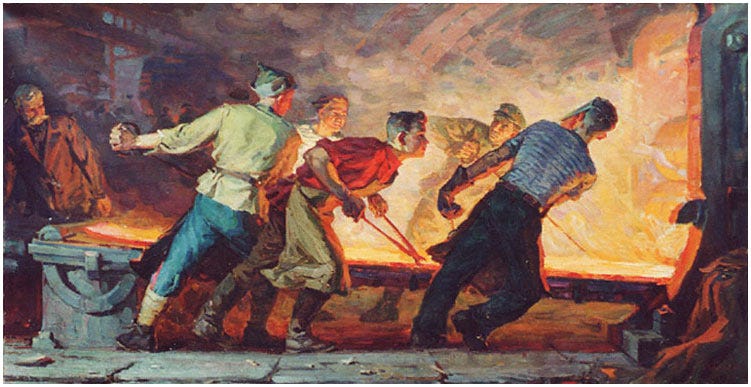
This study examines Marx’s political and social theory through radical empiricism, focusing on production, value through labour, and alienation. It explores how appropriation, transformation, and objectification define human activity within capitalism, highlighting the intrinsic relationality of individual existence and the consequences of wage labour that leads to alienation from both self and society.

The Nature That We Are: A Critique of Marxian Naturalism

Karl Marx’s view of human nature reconciles humanity’s corporeal existence with natural processes, highlighting labour as a natural necessity. While he distinguishes human capabilities from non-human life, this leads to unresolved ecological issues. Understanding freedom includes recognising the need for limits on human purposes and acknowledging nature’s independent significance beyond human interests.

Beneficence is Always Free: Principles of an Open-Order Anarcho-Capitalism

Introduction Anarcho-capitalism has developed a sophisticated account of private property, voluntary exchange, and the provision of law without government. Yet its defence of liberty remains philosophically incomplete if freedom is understood only as the absence of coercion. Human beings are not simply proprietors of themselves … Continue reading Beneficence is Always Free: Principles of an Open-Order Anarcho-Capitalism

Let the Markets Eat the Rich!: Three Essays on Left Market Anarchism

That is, the belief that the capitalist economic system is the product of thrift and abstention; of land enclosure and improvement; the propensity to truck, barter, and exchange; and the cash nexus as solution to a coincidence of wants. But as history teaches, the Industrial Revolution was not the outcome of peaceful and voluntary cooperation and exchange but violent and coercive state-backed aggression. One need not be a dogmatic Marxist to observe and understand this, it is historical fact. 

The Canvas of Historical Life: C.S. Peirce and the Semiotics of Ideology

Peirce’s theory of signs provides the basic analytical framework for understanding ideology as a structure of meaning. In his philosophy, all thought takes place through signs. A sign is something that stands to somebody for something in some respect. Each sign involves a triadic relation: the sign itself, the object to which it refers, and the interpretant, which is the understanding produced in the mind of the interpreter. Meaning arises not from isolated ideas but from the continuous interpretation of signs within a community.

A Terminal Beach: Francis Fukuyama, William James, and the Crisis of Liberal Democracy

Political systems succeed, in this framework, when they institutionalize recognition. Individuals accept the legitimacy of the order because their dignity is affirmed within it. Liberal democracy therefore appears anthropologically complete: the central psychological demand of human beings has been satisfied, and history in the dialectical sense has reached its resting place.